Flying Revolved Half Lotus

Flying Revolved Half Lotus

ARM BALANCE

FLYING REVOLVED HALF LOTUS

Some postures don’t arrive through imitation; they arrive through investigation. Flying Revolved Half Lotus is one of those shapes. It borrows familiar ingredients like Side Crow mechanics, hip opening, Janu Sirsasana–style leg positioning, spinal rotation, and the essential arm-balance actions of leaning, resisting, and pushing. It also demands strong scapular protraction and a willingness to stay curious rather than chase something predefined. In the full class, Matt shared that this pose wasn’t something he was necessarily taught, but rather that it emerged through exploration, asking how known shapes could reorganize into something new. In many ways, Flying Revolved Half Lotus can feel more approachable than Flying Full Lotus because it allows the hips to work asymmetrically. Instead of forcing symmetry, we learn to manage rotation, weight distribution, and balance through intelligent setup piece by piece – the Chromatic way of course.
chromatic yoga 15 hour immersion

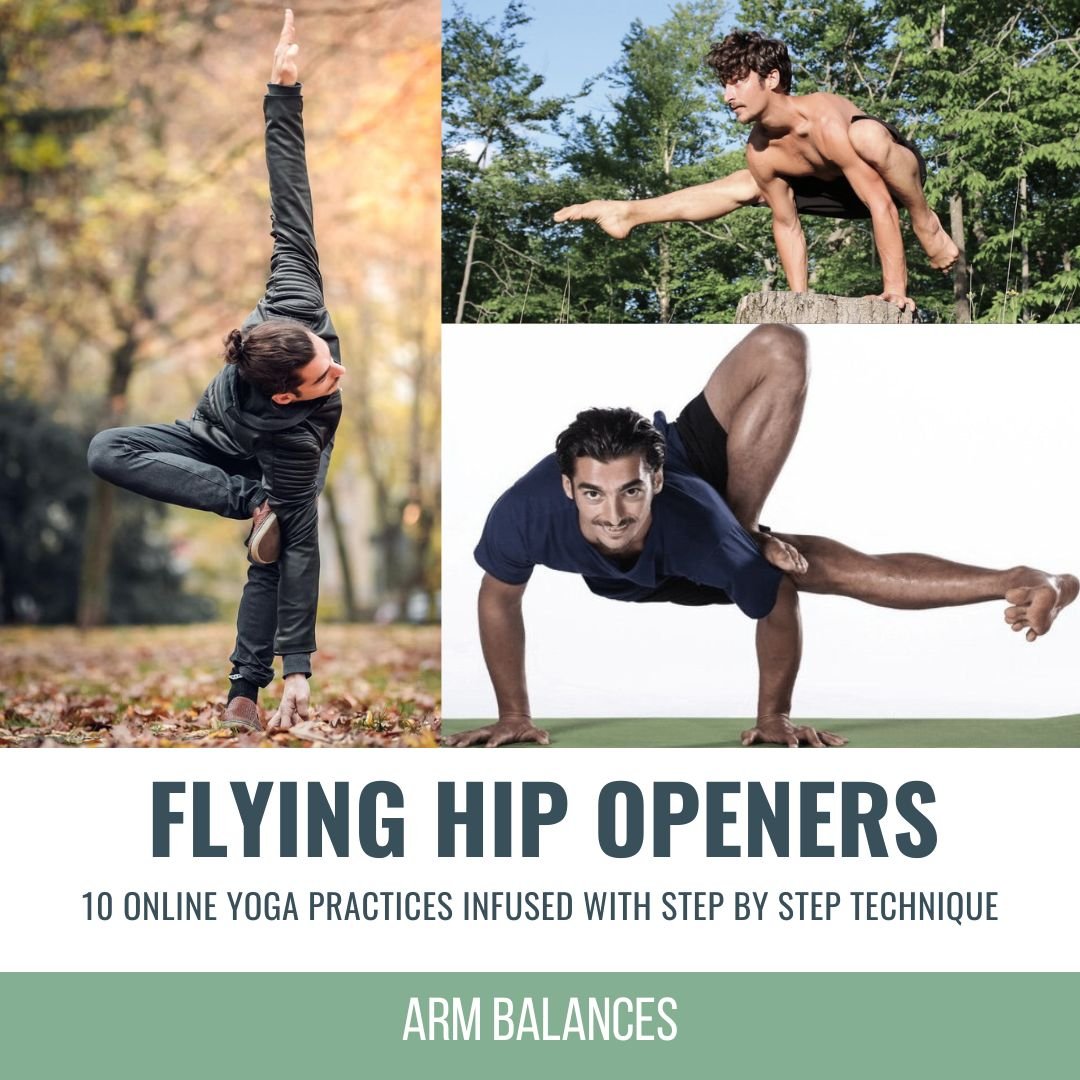
FLYING HIP OPENERS

ASANA INFUSED WITH STEP BY STEP TECHNIQUES FOR ARM BALANCES

  • 10 Chromatic Yoga practices with founder Matt Giordano
  • Physically Invigorating
  • Foundations, Refinement and Advancement
  • Meticulously Crafted Experiences to Set you up for Maximum Success
  • Included Postures: Crow, Side Crow, Firefly, Dragon Fly, Revolved Flying Half Lotus, Koundenyasana 1 & 2, Hybrid Arm Balances, Straddle Handstand and More
  • 12+ Arm Balances with Modifications and Variations!
  • Hip Opening Techniques, Core Strength, Wrist Strength and Mobility
  • All Levels Appropriate Full length 75 minute Classes
  • Non-dogmatic, Anatomy informed Alignment
  • The Perfect Blend of Knowledge and Practice
  • A Heavy Emphasis on Technique for the Poses Everyone Expects You to Know but Non One Teaches
  • 12 Continuing Education hours with Yoga Alliance and American Yoga Council
  • 12 Accredited Practice Hours with the Chromatic School of Yoga
  • Step-by-Step instruction for increased accessibility
  • Sweat, Breath, Strengthen, Stretch and Feel Amazing!

PIGEON IS IMPORTANT

We begin in a lifted pigeon preparation, with the right shin across the mat and the legs staying active rather than sinking into flexibility. Matt cues us to pull the pelvis back by reaching strongly through the back heel, creating length and tone at the same time. From here, the twist becomes the priority. We flex the spine and rotate, placing the left elbow down while the right hand actively pushes the torso away from the front thigh. This push-and-reach dynamic creates space for rotation rather than collapsing into it. The left arm reaches to deepen the twist while the right hand provides resistance, keeping the body buoyant and supported. Although the stretch is deep, the strength in the legs keeps us organized. This phase establishes the rotational blueprint we’ll later need when gravity becomes part of the equation.

WATCH THE VIDEO

FLYING REVOLVED HALF LOTUS: UNRAVEL ALL OF ITS PARTS

SIDE CROW IS VITAL

Before taking flight, we return to something familiar: Side Crow. Matt instructs us that any variation works, as long as the pelvis isn’t resting passively on the opposite elbow. Matt emphasizes lining the knee up outside the elbow so the load transfers cleanly through the arms. Whether squeezing a block between the shins, pulling a strap apart, or keeping one foot grounded, the goal is the same, which is to lean forward, grip the ground, and hold. This isn’t about how long we balance, but about imprinting the arm-balance mechanics that Flying Revolved Half Lotus depends on. Protraction, finger grip, and forward lean all get rehearsed here. Side Crow becomes the structural anchor of the pose, reminding us how rotation and balance coexist without one overpowering the other.
200 Hour Online Teacher Training Certification

200 HOUR ONLINE TEACHER TRAINING

GET CERTIFIED & DEEPEN YOUR YOGA PRACTICE

  • Deepen your yoga practice
  • Build confidence speaking in front of groups in person and online
  • Learn foundational class structures and templates
  • Learn techniques for a wide range of yoga postures
  • Get certified and highly qualified to teach yoga
  • Yoga Alliance Globally Recognized Certification Program

THE INITIAL SHAPE

Next, Matt brings us back to the floor to “imprint the experience.” With the left foot grounded and the right leg extended or bent, we sit up and lower down repeatedly, flexing and rotating the spine. This sit-up pattern mimics the core engagement and twisting effort of the final pose without the pressure of balancing. Holding the shape briefly lets the nervous system recognize it as familiar. From here, we might explore a standing variation that draws the knee tightly across the body, echoing the half-lotus pathway. Hands hover as if preparing for Side Crow, knees stay compact, and we subtly wiggle to find alignment. This phase isn’t flashy, but it’s essential. It’s where the body learns the shape before being asked to support it.
300 hour teacher training online

300 HOUR ONLINE TEACHER TRAINING

GET 500 HOUR CERTIFIED AS A MASTER TEACHER

Master your skill set as a teacher through refined techniques, anatomy, biomechanics, sequencing, philosophy, meditation techniques, theming, yoga business, and much more!

  • Get 500 hour certified
  • Learn anatomy, biomechanics, asana techniques
  • Expand your teaching skills
  • Masterful sequencing and verbal delivery
  • Learn meditation and breathwork techniques
  • Transformative tools: theming, dharma talks, satsang

READY TO GO

When all the pieces come together, the transition feels deliberate rather than rushed. We move the knees slightly to create space for the elbow, place the hands wide, and lean forward and slightly sideways. One knee presses down as the other draws inward, creating opposition that stabilizes the lift. Matt demonstrates options here, reminding us that Flying Revolved Half Lotus isn’t about forcing elevation, it’s about honoring the setup. Whether we lift fully or hover with control, the work has already been done. The hips understand their role, the arms know how to support, and the spine rotates with clarity. At this point, the pose isn’t mysterious, it’s simply a conversation between familiar actions, organized with intention.

Matt finished off 2025 with strength in his Flying Hip Openers Immersion.  Did you miss it?  You can still register for all of the lifetime replays here.

The 200 Hr. Teacher Training: Click Here to See the Next Start Date

The 300 Hr. Advanced Teacher Training: Click Here to See the Next Start Date

Article by Trish Curling

Video Extracted From: Flying Hip Openers Immersion
lotus pose online yoga classes

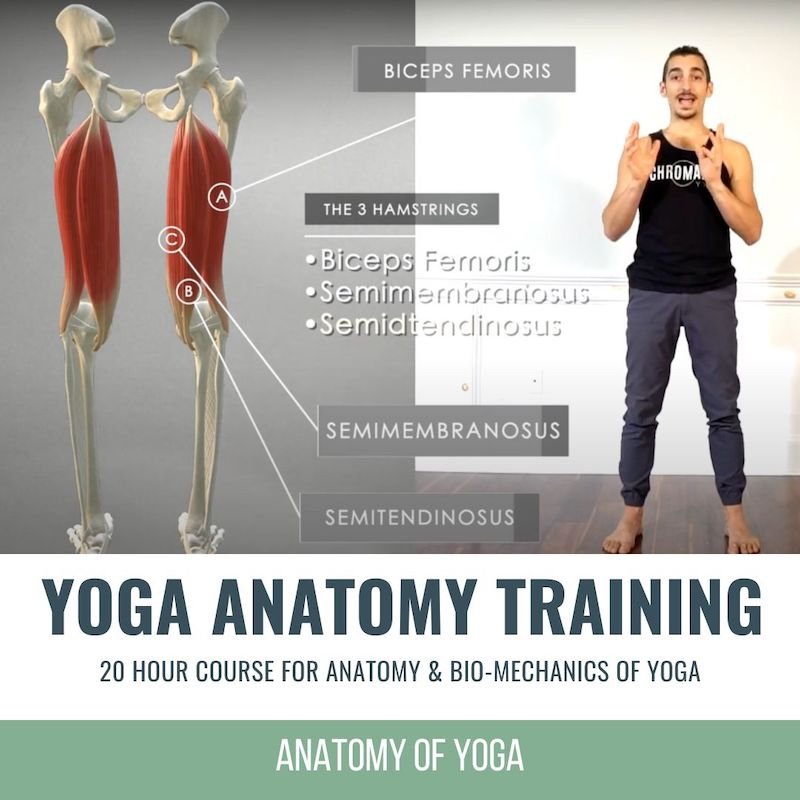
ONLINE ANATOMY COURSE

  • Accessible, exciting, and easy to learn
  • Anatomy and biomechanics for yoga
  • Appropriate for both teachers and students
  • Learn joint alignment vs pose alignment
  • Demystify yoga poses and transitions
  • Release aches and pains
  • Learn how to avoid common injuries
  • Caters to all levels with modifications and props
  • 20 hours Continued Education Credits with Yoga Alliance
  • 20 hours toward Chromatic Yoga Certification and 300 Hour
  • Lifetime access

Continue Learning

Flying Revolved Half Lotus

Flying Revolved Half Lotus

Flying Revolved Half LotusARM BALANCEFLYING REVOLVED HALF LOTUS Some postures don’t arrive through imitation; they arrive through investigation. Flying Revolved Half Lotus is one of those shapes. It borrows familiar ingredients like Side Crow mechanics, hip opening,...

read more
Eka Pada Bakasana

Eka Pada Bakasana

Eka Pada BakasanaSINGLE LEG CROWEKA PADA BAKASANA Eka Pada Bakasana asks us to balance curiosity with patience. This one-legged crow variation isn’t just about lifting a leg, it’s about organizing pressure, timing, and trust in unfamiliar territory. The posture...

read more
Eight Angle Pose

Eight Angle Pose

Eight Angle PoseASTAVAKRASANAEIGHT ANGLE POSE Sometimes we think arm balances are about getting higher, but Matt reframes Eight Angle pose as a mechanics workshop. This posture thrives when we test rotation, pelvic placement, and upper-body stability as interconnected...

read more
Approachable Arm Balances

Approachable Arm Balances

Approachable Arm BalancesPARSVA BAKASANAAPPROACHABLE ARM BALANCES Approachable arm balances aren’t about fearlessness; they’re about informed action. When we understand the mechanics behind the posture, we gain the power to shape our own outcomes. Rather than jumping...

read more
Perfect Protraction For Crow Pose

Perfect Protraction For Crow Pose

Perfect Protraction For Crow PoseBAKASANAPERFECT PROTRACTION FOR CROW POSE When working toward perfect protraction for Crow Pose, it’s essential to understand the role of the serratus anterior, the “fingertip” muscles that wrap around the rib cage and attach to the...

read more
Help For Hamstrings

Help For Hamstrings

Help For HamstringsFLEXIBILITYHELP FOR HAMSTRINGS “Yoga butt” or high hamstring tendonitis can be a literal pain where the sit bones meet the hamstrings and glutes. This area is prone to overuse injuries, especially when repetitive forward folds overstretch rather...

read more

THE FREE TECHNIQUE PACK

When You Subscribe, You Will Get Instant Access to

  • the Technique Pack: 15 yoga pose breakdowns
  • exclusive online course discounts
  • exclusive blogs and videos
  • This field is for validation purposes and should be left unchanged.

Tight Hips

Tight Hips

HIP MOBILITY

TIGHT HIPS

When working to release tight hips, most people instinctively go straight for deep stretches. But one often overlooked area that holds a surprising amount of tension is the adductorS (the inner thigh muscles) that connect to the pelvis. While it’s common to try and stretch them out, Matt introduces a smarter approach: activate them while stretching (a technique known as a Facilitated Stretch). This technique brings stability to the hip joint, which in turn reduces strain elsewhere in the body. Why does that matter? Because tight hips can lead to issues in the joints above or below—most notably, the knees and the lower back. If the hip doesn’t move as it should, the knee or spine may compensate by moving too much. This extra movement increases friction, and friction often leads to pain. So to protect the knees and lower back, we don’t just stretch the hips, we strengthen and activate as we open them.

chromatic yoga 15 hour immersion

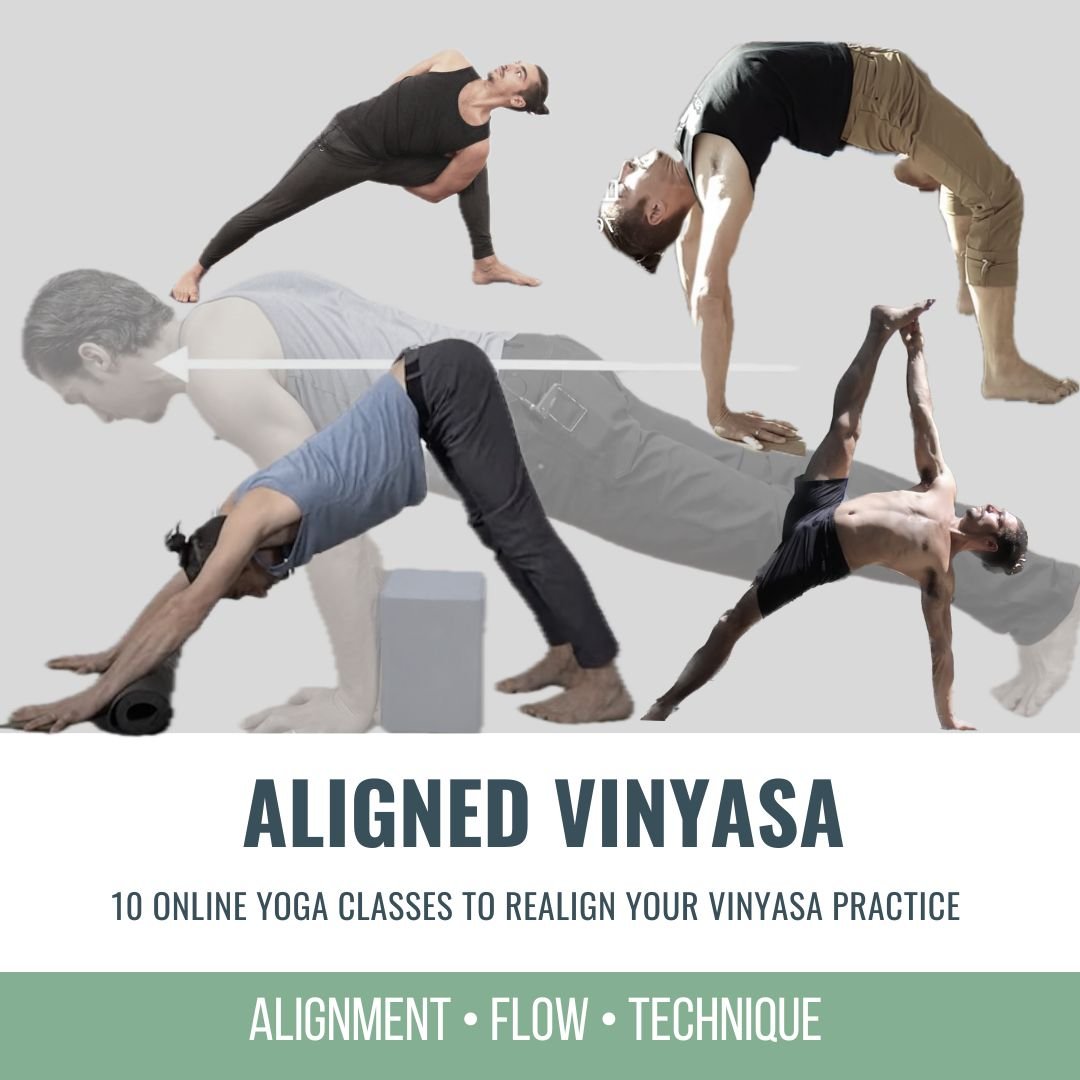
ALIGNED VINYASA

REGISTRATION NOW OPEN

  • 10 Chromatic Yoga practices with founder Matt Giordano
  • Full length 75 minute classes
  • 10 Peak Postures: The Most Essential Poses of the Vinyasa Practice
  • Meticulously Crafted Experiences to Enhance Your Postural Practice
  • Non-dogmatic, Anatomy informed Alignment
  • The Perfect Blend of Knowledge and Practice
  • A Heavy Emphasis on Technique for the Poses Everyone Expects You to Know but No One Teaches
  • 12 Continuing Education hours with Yoga Alliance
  • 12 Accredited Hours with the Chromatic School of Yoga
  • Step-by-Step instruction for increased accessibility
  • Sweat, Breath, Strengthen, Stretch and Feel Amazing!

WHERE WE FIND THE PAIN

The body is a chain of interconnected parts, and pain doesn’t always show up where the problem begins. With tight hips, discomfort often surfaces in neighboring areas—the knees or the lower back—because they’re forced to do extra work. Matt teaches that when the hips lack mobility, the joints above and below take on the burden, resulting in excessive movement. That movement increases friction, and over time, friction is what creates pain. The lower back may start to compensate with excessive arching or twisting, while the knees may absorb force that should have been dispersed by the hips. By addressing the root of the restriction, unlocking and stabilizing the hips—we can reduce unnecessary motion in these vulnerable areas. The key is understanding that pain doesn’t always mean injury where it hurts. Instead, it often signals compensation patterns that stem from unresolved tension elsewhere. The journey toward ease begins where we’re stuck, not necessarily where we’re sore.

WATCH THE VIDEO

TIGHT HIPS: 5 POSTURES TO UNLOCK, UNLEASH & RELEASE

ACTIVATION OF MUSCLES

To create real, sustainable mobility, especially when working with tight hips—passive stretching alone often isn’t enough. Instead, activating the muscles while they are being stretched can lead to far greater flexibility and control. This approach taps into the body’s neuromuscular system, specifically the Golgi tendon organ (GTO)—a sensory receptor located where muscle meets tendon. The GTO monitors tension in the muscle and sends signals to the brain about the level of strain. When we actively contract a muscle during a stretch, the GTO responds by telling the brain that the muscle is under control and not at risk. In turn, the brain allows the muscle to release more deeply, giving us a wider, safer range of motion. This type of muscle activation not only improves flexibility but also teaches the body how to maintain strength and support through a greater range—making it ideal for addressing tight hips with both precision and purpose.

200 Hour Online Teacher Training Certification

200 HOUR ONLINE TEACHER TRAINING

GET CERTIFIED & DEEPEN YOUR YOGA PRACTICE

  • Deepen your yoga practice
  • Build confidence speaking in front of groups in person and online
  • Learn foundational class structures and templates
  • Learn techniques for a wide range of yoga postures
  • Get certified and highly qualified to teach yoga
  • Yoga Alliance Globally Recognized Certification Program

TARGET THE ADDUCTORS

In today’s video, Matt shares five powerful postures to release tight hips by targeting the often-overlooked adductors—the inner thigh muscles essential for both stability and mobility. Across Lizard Pose, Warrior II, Side Angle, Skandasana, and a posture between Upavistha Konasana and Samakonasana, the unifying action is isometrically drawing the legs toward each other.  Each pose, however, includes one signature cue to unlock the deepest benefit. In Lizard, hugging the front knee into the shoulder and pushing the front heel down helps to heighten the hips—a sign of proper activation. In Warrior II, Matt cues a subtle sit-back before pulling the feet in, which softens the inner thighs. Side Angle adds knee-to-arm pressure for more adductor engagement. In Skandasana, dorsiflexing the foot and dragging the heel inward (as if towards the midline) lights up the inner thigh.  In the final pose, Matt emphasizes tipping the pelvis forward before hitting our full stretch, so activation leads the way.

300 hour teacher training online

300 HOUR ONLINE TEACHER TRAINING

GET 500 HOUR CERTIFIED AS A MASTER TEACHER

Master your skill set as a teacher through refined techniques, anatomy, biomechanics, sequencing, philosophy, meditation techniques, theming, yoga business, and much more!

  • Get 500 hour certified
  • Learn anatomy, biomechanics, asana techniques
  • Expand your teaching skills
  • Masterful sequencing and verbal delivery
  • Learn meditation and breathwork techniques
  • Transformative tools: theming, dharma talks, satsang

FROM TECHNIQUE TO FREEDOM

When working with tight hips, it’s easy to assume that stretching alone will bring relief—but as we’ve explored in Matt’s teachings, it’s the intentional techniques that truly create change. From targeting the adductors to activating muscles during stretching, these methods help develop strength, control, and lasting mobility. Overtime, as these techniques become ingrained in our movement patterns, we no longer need to focus on every micro-adjustment. Instead, we begin to move with greater ease and confidence, even in postures that once felt out of reach. The result is a genuine sense of freedom in the body—not just more flexibility, but a deeper understanding of how to move well. If you’re ready to explore this approach further, Matt’s May online immersion, Aligned Vinyasa, offers 10 guided classes designed to build this connection between technique and flow, helping you move smarter, safer, and more freely in every practice.

The 200 Hr. Teacher Training: Click Here to See the Next Start Date

The 300 Hr. Advanced Teacher Training: Click Here to See the Next Start Date

Article by Trish Curling

Video Extracted From: Revelation Immersion

lotus pose online yoga classes

ONLINE ANATOMY COURSE

  • Accessible, exciting, and easy to learn
  • Anatomy and biomechanics for yoga
  • Appropriate for both teachers and students
  • Learn joint alignment vs pose alignment
  • Demystify yoga poses and transitions
  • Release aches and pains
  • Learn how to avoid common injuries
  • Caters to all levels with modifications and props
  • 20 hours Continued Education Credits with Yoga Alliance
  • 20 hours toward Chromatic Yoga Certification and 300 Hour
  • Lifetime access

Continue Learning

Flying Revolved Half Lotus

Flying Revolved Half Lotus

Flying Revolved Half LotusARM BALANCEFLYING REVOLVED HALF LOTUS Some postures don’t arrive through imitation; they arrive through investigation. Flying Revolved Half Lotus is one of those shapes. It borrows familiar ingredients like Side Crow mechanics, hip opening,...

read more
Eka Pada Bakasana

Eka Pada Bakasana

Eka Pada BakasanaSINGLE LEG CROWEKA PADA BAKASANA Eka Pada Bakasana asks us to balance curiosity with patience. This one-legged crow variation isn’t just about lifting a leg, it’s about organizing pressure, timing, and trust in unfamiliar territory. The posture...

read more
Eight Angle Pose

Eight Angle Pose

Eight Angle PoseASTAVAKRASANAEIGHT ANGLE POSE Sometimes we think arm balances are about getting higher, but Matt reframes Eight Angle pose as a mechanics workshop. This posture thrives when we test rotation, pelvic placement, and upper-body stability as interconnected...

read more
Approachable Arm Balances

Approachable Arm Balances

Approachable Arm BalancesPARSVA BAKASANAAPPROACHABLE ARM BALANCES Approachable arm balances aren’t about fearlessness; they’re about informed action. When we understand the mechanics behind the posture, we gain the power to shape our own outcomes. Rather than jumping...

read more
Perfect Protraction For Crow Pose

Perfect Protraction For Crow Pose

Perfect Protraction For Crow PoseBAKASANAPERFECT PROTRACTION FOR CROW POSE When working toward perfect protraction for Crow Pose, it’s essential to understand the role of the serratus anterior, the “fingertip” muscles that wrap around the rib cage and attach to the...

read more
Help For Hamstrings

Help For Hamstrings

Help For HamstringsFLEXIBILITYHELP FOR HAMSTRINGS “Yoga butt” or high hamstring tendonitis can be a literal pain where the sit bones meet the hamstrings and glutes. This area is prone to overuse injuries, especially when repetitive forward folds overstretch rather...

read more

THE FREE TECHNIQUE PACK

When You Subscribe, You Will Get Instant Access to

  • the Technique Pack: 15 yoga pose breakdowns
  • exclusive online course discounts
  • exclusive blogs and videos
  • This field is for validation purposes and should be left unchanged.

Target The Hip Joint

Target The Hip Joint

alignment

TARGET THE HIP JOINT

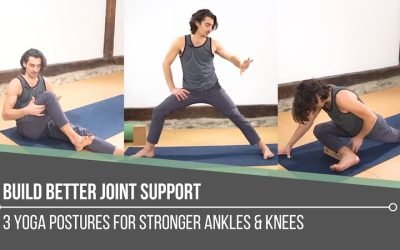
Unlike the hip joint, the movement available at the knee is primarily meant for flexion and extension.  When we engage in hip opening postures in our yoga practice, there can be a great impact on both the hip and the knee.  This will depend on many factors of course, so we must consider our individual situations and/or conditions in these areas.  In order to avoid injury, direction from our healthcare practitioners takes priority before we can consider exploring on the yoga mat.  Intention and how we move can have a great impact on avoiding knee strain, pain and/or injury.  The postures and unique variations Matt shares in today’s video are practical and easily implemented.  It’s all about how we move and target the hip joint that will reduce the negative impact that may occur in the knee.

chromatic yoga 15 hour immersion

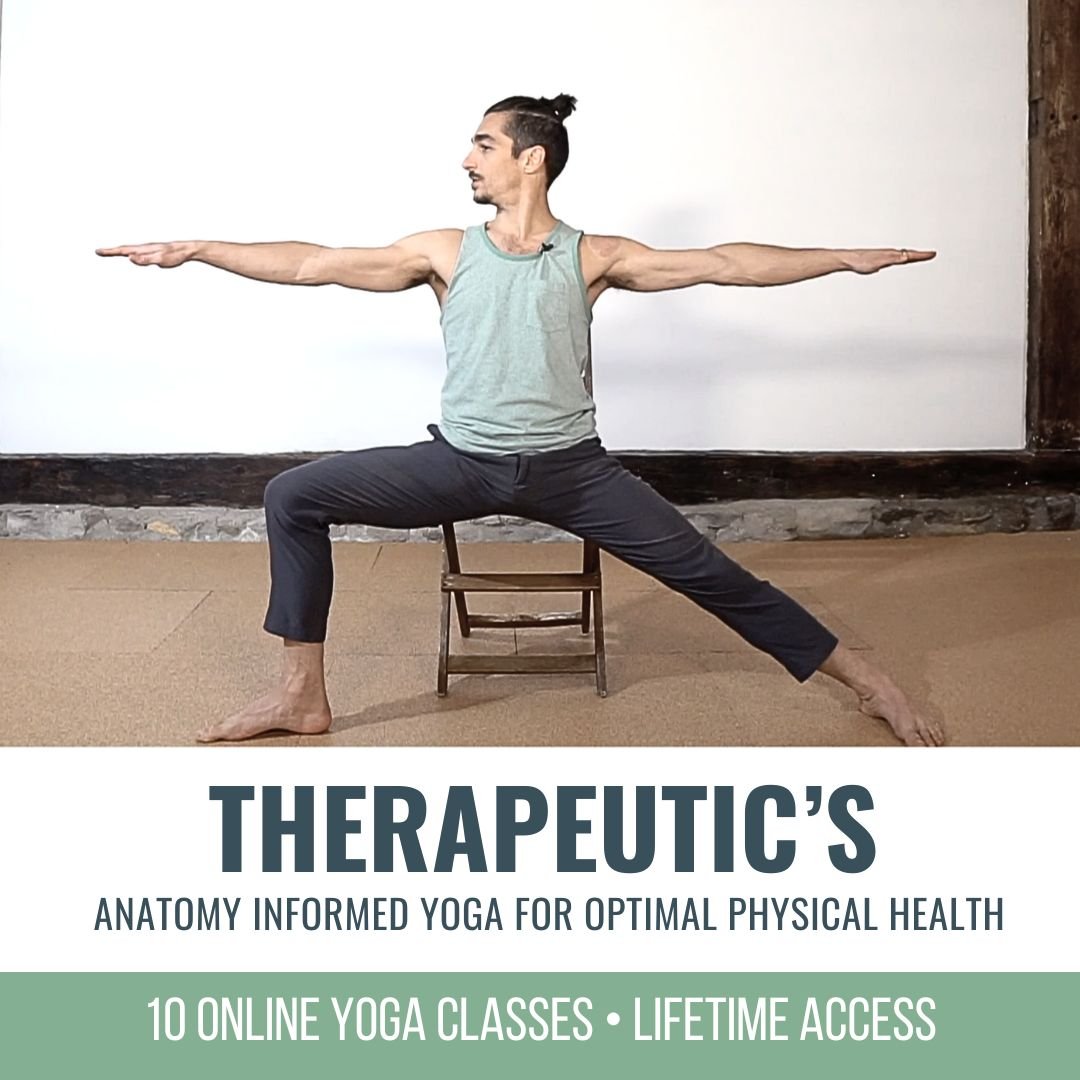
THERAPEUTIC'S

REGISTRATION NOW OPEN

  • 10 Chromatic Yoga practices with founder Matt Giordano
  • Full length 75 minute classes
  • Each Yoga class explore’s how to maintain optimal health in areas of the body that are prone to injury and chronic pain.
  • Highly informative and educational classes for both practitioners and teachers.
  • Each class includes warm ups, sun salutations, standing postures and cool down
  • How to use props to modify or enhance benefits of each asana.
  • Technique, biomechanics, and alignment at the forefront
  • 12 Continuing Education hours with Yoga Alliance
  • 12 Accredited Hours with the Chromatic School of Yoga
  • Step-by-Step instruction for increased accessibility
  • Improve strength, balance, flexibility, and proprioception
  • Disclaimer #1: This is not designed as “Yoga Therapy” and will not diagnose or treat any specific ailments or injuries.
  • Disclaimer #2: The purpose of this immersion is for education, exploration and understanding your options: there are no hard and fast solutions to injury’s that can be solved solely by practicing yoga
  • Disclaimer #3: If you have an acute injury, be sure you have a doctors approval prior to practicing this immersion

LIZARD POSE EXERCISE

Hip opening requires external rotation at the hip joint.  In Lizard pose, it’s easy to think about initiating this movement from the knee, but this is where it can go wrong for some of us.  In the demonstration, Matt cues us to flex the foot and then rotate the shin and thigh together as a unit.  In this Lizard pose exercise we are rotating inward and outward, which provides lots of practice and opportunity to move as a unit.  This may reduce the chance of any strain on the ligaments of the knee.  He clarifies that it doesn’t mean that if it does not move as a unit that there will in fact be strain or pain, but it’s the exploration of this movement that may prevent or assist in the reduction of strain.  When we move like this, it’s actually encouraging the muscles of the inner thigh to turn on, which means that when we strengthen, we encourage more available movement.

WATCH THE VIDEO

TARGET THE HIP JOINT: REDUCE STRAIN IN THE KNEES

“COUNTERTOP” PIGEON

This variation of Pigeon pose is great because it offers less flexion at the hip joint.  When there is more joint space, it eases up on the potential compression.  In the video demonstration, the shin is facing the same direction as the toes.  On the yoga mat in a more “traditional position” the pressure is put on the foot to medially rotate the shin, this is where we can experience more pressure on the inside of the knee or more strain on the outside.  Of course we can add or back away from any amount of hip flexion by draping forward.  Exploring like this can help us to understand where and when we are feeling more sensation at any given moment.  We can use a countertop, but what we see in the video is Matt’s use of a stool along with 2 yoga blocks.  Be creative and find what works.  This will get us thinking more about our own bodies and how to support our own practice.

200 Hour Online Teacher Training Certification

200 HOUR ONLINE TEACHER TRAINING

GET CERTIFIED & DEEPEN YOUR YOGA PRACTICE

  • Deepen your yoga practice
  • Build confidence speaking in front of groups in person and online
  • Learn foundational class structures and templates
  • Learn techniques for a wide range of yoga postures
  • Get certified and highly qualified to teach yoga
  • Yoga Alliance Globally Recognized Certification Program

MORE PIGEON VARIATIONS

Kneeling On A Chair

So what more can we do?  If it’s too much to open the hip at standing level height, then this may be a better option.  Here, Matt demonstrates how we can both deepen and vary the stretch.  Changing the direction of where we lean over the front leg offers a deep stretch in different locations of the hip

Pigeon With A Block

When using a block for support in pigeon pose, it’s common that the block is placed under the buttock of the front leg for support, but we can actually encourage deeper range and better mobility of the hip joint by placing the block underneath the shin of the front leg.  

The 2 key actions here are pushing the inner thigh down and out to the side, so that the thigh bone goes into deeper external rotation which shortens the tissues on the outer knee, again with the intention of reducing strain.

    300 hour teacher training online

    300 HOUR ONLINE TEACHER TRAINING

    GET 500 HOUR CERTIFIED AS A MASTER TEACHER

    Master your skill set as a teacher through refined techniques, anatomy, biomechanics, sequencing, philosophy, meditation techniques, theming, yoga business, and much more!

    • Get 500 hour certified
    • Learn anatomy, biomechanics, asana techniques
    • Expand your teaching skills
    • Masterful sequencing and verbal delivery
    • Learn meditation and breathwork techniques
    • Transformative tools: theming, dharma talks, satsang

    WHAT’S THE POINT?

    So, what’s the point of all of this exploration? The point is we can be more of an active participant in our own healing.  Injury and pain are never fun or ideal, but what they can offer is an opportunity to learn more about how our bodies work and respond to different actions. Taking the time to do things like add and/or remove various props, engage in self adjustments, deepen or back away from stretch sensation while adding more strength, can all contribute to the reduction of pain in a given posture.  The variations explored today can actually provide what we desire in hip opening postures (increased mobility along with stability).

    Register for Matt’s current onlineTherapeutics immersion to uncover more possibilities when dealing with pain.

    The 200 Hr. Teacher Training: Click Here to See the Next Start Date

    The 300 Hr. Advanced Teacher Training: Click Here to See the Next Start Date

    Article by Trish Curling

    Video Extracted From: Therapeutics Immersion

    lotus pose online yoga classes

    ONLINE ANATOMY COURSE

    • Accessible, exciting, and easy to learn
    • Anatomy and biomechanics for yoga
    • Appropriate for both teachers and students
    • Learn joint alignment vs pose alignment
    • Demystify yoga poses and transitions
    • Release aches and pains
    • Learn how to avoid common injuries
    • Caters to all levels with modifications and props
    • 20 hours Continued Education Credits with Yoga Alliance
    • 20 hours toward Chromatic Yoga Certification and 300 Hour
    • Lifetime access

    Continue Learning

    Flying Revolved Half Lotus

    Flying Revolved Half Lotus

    Flying Revolved Half LotusARM BALANCEFLYING REVOLVED HALF LOTUS Some postures don’t arrive through imitation; they arrive through investigation. Flying Revolved Half Lotus is one of those shapes. It borrows familiar ingredients like Side Crow mechanics, hip opening,...

    read more
    Eka Pada Bakasana

    Eka Pada Bakasana

    Eka Pada BakasanaSINGLE LEG CROWEKA PADA BAKASANA Eka Pada Bakasana asks us to balance curiosity with patience. This one-legged crow variation isn’t just about lifting a leg, it’s about organizing pressure, timing, and trust in unfamiliar territory. The posture...

    read more
    Eight Angle Pose

    Eight Angle Pose

    Eight Angle PoseASTAVAKRASANAEIGHT ANGLE POSE Sometimes we think arm balances are about getting higher, but Matt reframes Eight Angle pose as a mechanics workshop. This posture thrives when we test rotation, pelvic placement, and upper-body stability as interconnected...

    read more
    Approachable Arm Balances

    Approachable Arm Balances

    Approachable Arm BalancesPARSVA BAKASANAAPPROACHABLE ARM BALANCES Approachable arm balances aren’t about fearlessness; they’re about informed action. When we understand the mechanics behind the posture, we gain the power to shape our own outcomes. Rather than jumping...

    read more
    Perfect Protraction For Crow Pose

    Perfect Protraction For Crow Pose

    Perfect Protraction For Crow PoseBAKASANAPERFECT PROTRACTION FOR CROW POSE When working toward perfect protraction for Crow Pose, it’s essential to understand the role of the serratus anterior, the “fingertip” muscles that wrap around the rib cage and attach to the...

    read more
    Help For Hamstrings

    Help For Hamstrings

    Help For HamstringsFLEXIBILITYHELP FOR HAMSTRINGS “Yoga butt” or high hamstring tendonitis can be a literal pain where the sit bones meet the hamstrings and glutes. This area is prone to overuse injuries, especially when repetitive forward folds overstretch rather...

    read more

    THE FREE TECHNIQUE PACK

    When You Subscribe, You Will Get Instant Access to

    • the Technique Pack: 15 yoga pose breakdowns
    • exclusive online course discounts
    • exclusive blogs and videos
    • This field is for validation purposes and should be left unchanged.

    Janu Sirsasana To Half Lotus

    Janu Sirsasana to Half Lotus

    Kurmasana

    JANU SIRSASANA TO HALF LOTUS

    There’s never one single route to a posture we’re exploring. There are individual specifics we always need to consider.  

    When it comes to hip opening postures like Janu Sirsasana and Half Lotus, we may believe that they are very close in terms of the amount of hip range of motion that is required. This may be true for some people but not for others and comes back to what we’re individually experiencing in our bodies. We may experience tightness or pain in either posture. While there can be a direct connection between hip range of motion and knee pain, there are actions and steps we can take to make access to these postures more available. In today’s video, Matt demonstrates techniques we can implement that reduce hip tightness while increasing hip range of motion.

    chromatic yoga 15 hour immersion

    ITALY RETREAT

    REGISTRATION NOW OPEN

    • Spa & Yoga Retreat
    • Close to the coast line and beaches
    • 2 spa days included (sauna, hot tub, Turkish bath)
    • Morning and early-evening yoga with Matt
    • Daytime free for adventures or to enjoy Ayurvedic massage and treatments
    • Connect with incredible yogis from around the world!
    • ALL LEVELS and all ages 18-85 appropriate
    • Skillfully guided experience: yoga, meditation, breathwork
    • Biomechanics and inspirational philosophy
    • Welcoming and communal group of yogis!

    FIX FOR KNEE PAIN

    Both postures require external rotation of the hip. Yes, Half Lotus will require more, but we can still pay attention to the sensations we feel when setting up in Janu Sirsasana. The first thing we can do in the attempt to alleviate hip pain is to use support from props. The other “fix,” of course, would be to explore other postures that contribute to and develop increased hip range of motion.

    In the Janu Sirsasana variations Matt demonstrates in the video, we see that he uses both towels and blocks to prop up either his entire body or the bent knee for support.

    As far as other postures go, it’s often about activation of the muscles we’re trying to lengthen.

    If we’re exploring Janu Sirsasana, then working intelligently on the variation that helps us practice without pain will be vital in our development towards Lotus Pose.

    WATCH THE VIDEO

    JANU SIRSASANA TO HALF LOTUS: LESS TIGHTNESS, MORE RANGE

    JANU SIRSASANA VARIATION

    Matt jumps straight into Janu Sirsasana variations at the beginning of the clip.

    He starts us off in a variation with a twist and a bind, which is a deep stretch for the hips. What we need to pay attention to here is both the amount of external rotation and potentially the activation of the muscles that surround the hip joint.  

    We can give ourselves our own adjustment by using the hand to externally rotate the thigh and/or by pressing the knee down towards the floor for muscle activation.

    200 Hour Online Teacher Training Certification

    200 HOUR ONLINE TEACHER TRAINING

    GET CERTIFIED & DEEPEN YOUR YOGA PRACTICE

    • Deepen your yoga practice
    • Build confidence speaking in front of groups in person and online
    • Learn foundational class structures and templates
    • Learn techniques for a wide range of yoga postures
    • Get certified and highly qualified to teach yoga
    • Yoga Alliance Globally Recognized Certification Program

    STANDING HALF LOTUS

    Whether we’re standing or sitting, the same principles apply. It’s never a good idea to force ourselves into a posture! Here are the steps:

    1. Bring the ankle up so that the shin of the lifted leg is parallel to the ground
    2. Use a self-adjustment to externally rotate the hip
    3. Bring the lifted leg out to the side (to help with hip tightness)
    4. Once the heel has been moved towards the belly  button, the knee can be lowered down towards the ground

    Before lowering completely into an Uttanasana position, Matt offers more variations, in which we get the opportunity to bind the hands.  

    This standing position might be the direct route to Half Lotus we’re looking for, due to our increased ability to rest the ankle of the bent leg across the standing leg. This can only be achieved when the tightness subsides and more range of motion is realized.

    300 hour teacher training online

    300 HOUR ONLINE TEACHER TRAINING

    GET 500 HOUR CERTIFIED AS A MASTER TEACHER

    Master your skill set as a teacher through refined techniques, anatomy, biomechanics, sequencing, philosophy, meditation techniques, theming, yoga business, and much more!

    • Get 500 hour certified
    • Learn anatomy, biomechanics, asana techniques
    • Expand your teaching skills
    • Masterful sequencing and verbal delivery
    • Learn meditation and breathwork techniques
    • Transformative tools: theming, dharma talks, satsang

    SUPPORT AND EXECUTE

    Taking deliberate action and being very intentional about how we move and combine these two postures will indicate how much hip range of motion we develop.

    In the final portion of today’s clip, Matt demonstrates the “baby cradle” movement with the bent leg. This helps us safely guide the bent leg out further, which is one of the vital actions to reduce tightness in the hip.  

    Whether we opt for the bind variations or not, we are still mindful about how we set the hips in the Half Lotus variation. Using props to support the knee can serve as a reminder to encourage more external rotation. When we do this, we are actively supporting ourselves and providing ourselves with the ability to execute these deep hip-opening postures with more intelligence and ease.

    Don’t miss your opportunity to register for Matt’s upcoming retreat in Italy. The Early Bird Options are closing soon!

    The 200 Hr. Teacher Training: Click Here to See the Next Start Date

    The 300 Hr. Advanced Teacher Training: Click Here to See the Next Start Date

    Article by Trish Curling

    Video Extracted From: Hips & Hamstrings Immersion

    lotus pose online yoga classes

    ONLINE ANATOMY COURSE

    • Accessible, exciting, and easy to learn
    • Anatomy and biomechanics for yoga
    • Appropriate for both teachers and students
    • Learn joint alignment vs pose alignment
    • Demystify yoga poses and transitions
    • Release aches and pains
    • Learn how to avoid common injuries
    • Caters to all levels with modifications and props
    • 20 hours Continued Education Credits with Yoga Alliance
    • 20 hours toward Chromatic Yoga Certification and 300 Hour
    • Lifetime access

    Continue Learning

    Flying Revolved Half Lotus

    Flying Revolved Half Lotus

    Flying Revolved Half LotusARM BALANCEFLYING REVOLVED HALF LOTUS Some postures don’t arrive through imitation; they arrive through investigation. Flying Revolved Half Lotus is one of those shapes. It borrows familiar ingredients like Side Crow mechanics, hip opening,...

    read more
    Eka Pada Bakasana

    Eka Pada Bakasana

    Eka Pada BakasanaSINGLE LEG CROWEKA PADA BAKASANA Eka Pada Bakasana asks us to balance curiosity with patience. This one-legged crow variation isn’t just about lifting a leg, it’s about organizing pressure, timing, and trust in unfamiliar territory. The posture...

    read more
    Eight Angle Pose

    Eight Angle Pose

    Eight Angle PoseASTAVAKRASANAEIGHT ANGLE POSE Sometimes we think arm balances are about getting higher, but Matt reframes Eight Angle pose as a mechanics workshop. This posture thrives when we test rotation, pelvic placement, and upper-body stability as interconnected...

    read more
    Approachable Arm Balances

    Approachable Arm Balances

    Approachable Arm BalancesPARSVA BAKASANAAPPROACHABLE ARM BALANCES Approachable arm balances aren’t about fearlessness; they’re about informed action. When we understand the mechanics behind the posture, we gain the power to shape our own outcomes. Rather than jumping...

    read more
    Perfect Protraction For Crow Pose

    Perfect Protraction For Crow Pose

    Perfect Protraction For Crow PoseBAKASANAPERFECT PROTRACTION FOR CROW POSE When working toward perfect protraction for Crow Pose, it’s essential to understand the role of the serratus anterior, the “fingertip” muscles that wrap around the rib cage and attach to the...

    read more
    Help For Hamstrings

    Help For Hamstrings

    Help For HamstringsFLEXIBILITYHELP FOR HAMSTRINGS “Yoga butt” or high hamstring tendonitis can be a literal pain where the sit bones meet the hamstrings and glutes. This area is prone to overuse injuries, especially when repetitive forward folds overstretch rather...

    read more

    THE FREE TECHNIQUE PACK

    When You Subscribe, You Will Get Instant Access to

    • the Technique Pack: 15 yoga pose breakdowns
    • exclusive online course discounts
    • exclusive blogs and videos
    • This field is for validation purposes and should be left unchanged.

    Turtle Pose To Titibhasana

    Turtle Pose to Titibhasana

    Kurmasana

    TURTLE POSE TO TITIBHASANA

    Turtle Pose is not tiny by any means! There is a great deal that goes into its preparation. It’s also an excellent preparatory posture for Titibhasana. The journey between these two poses is marked by a series of intentional movements and precise adjustments that build the necessary strength, flexibility, and awareness. Each “tiny” action, such as a subtle shift in weight or the activation of muscles, guides us to the next step. These incremental triumphs remind us that progress is found in the details, teaching us to trust the power of small but deliberate actions as we evolve from Turtle Pose to the graceful strength of Titibhasana.

    chromatic yoga 15 hour immersion

    ITALY RETREAT

    REGISTRATION NOW OPEN

    • Spa & Yoga Retreat
    • Close to the coast line and beaches
    • 2 spa days included (sauna, hot tub, Turkish bath)
    • Morning and early-evening yoga with Matt
    • Daytime free for adventures or to enjoy Ayurvedic massage and treatments
    • Connect with incredible yogis from around the world!
    • ALL LEVELS and all ages 18-85 appropriate
    • Skillfully guided experience: yoga, meditation, breathwork
    • Biomechanics and inspirational philosophy
    • Welcoming and communal group of yogis!

    TURTLE POSE AS PREPARATION

    It’s really a “no-brainer” that Turtle Pose would be a logical choice to be part of the preparation for Titibhasana. There’s a definite overlap in terms of the shape that is created. In the clip, Matt takes us through the steps that help us get the legs high up on the arms. He does this by highlighting the internal rotation of the legs. This may be challenging because Turtle Pose is a deep posture. Placing blocks underneath the forearms and keeping the knees bent can help us train both the strength of the inner thighs and the ability to access deeper spinal flexion. Implementing small actions can support the ability to transition from one stage to the next. Being intentional is vital. Next, practicing Turtle Pose in another plane will continue to aid us in transitioning from Turtle Pose to Titibhasana.

    WATCH THE VIDEO

    TURTLE POSE TO TITIBHASANA: TRAINING TINY TRANSITIONS

    STANDING TURTLE POSE

    When we explore postures in a different plane, sometimes something seems to click in our minds. We might discover a microadjustment that transfers well to the actual shape we’re working towards. Standing Turtle Pose requires deep hip flexion and requires us to sit into more of a squat-like position during the setup to get the shoulders more deeply under the legs. This is not possible in the traditional position on the ground, since we can’t go any deeper than the level of the floor. What occurs in the standing variation is the patterning of strength and flexibility in areas of the body like the erector spinae and hamstring muscles. This valuable exploration helps establish the required hip and spinal flexion required for both Turtle Pose and Titibhasana.

    200 Hour Online Teacher Training Certification

    200 HOUR ONLINE TEACHER TRAINING

    GET CERTIFIED & DEEPEN YOUR YOGA PRACTICE

    • Deepen your yoga practice
    • Build confidence speaking in front of groups in person and online
    • Learn foundational class structures and templates
    • Learn techniques for a wide range of yoga postures
    • Get certified and highly qualified to teach yoga
    • Yoga Alliance Globally Recognized Certification Program

    “TINY” TITIBHASANA

    Here, we’re back on the floor with the inability to bend deeply, so the trick is to scoot the buttocks back before attempting hip and spinal flexion.  

    Step by step, Matt takes us through tiny transitions that bring us closer to a deep Turtle Pose, which is essentially a “tiny” Titibhasana.

    In the video, he starts us off in a narrow straddle position with the elbows placed on the ground inside the knees with a round back to lengthen the back body. Next, we transition to bent knees with the torso more upright as we pull the rib cage back in an attempt to get the shoulders more inside the knees. As we come into this position, the squeeze of the knees is very important. Finally, pulling the elbows back mimics what it’s like to be in Titibhasana.

    300 hour teacher training online

    300 HOUR ONLINE TEACHER TRAINING

    GET 500 HOUR CERTIFIED AS A MASTER TEACHER

    Master your skill set as a teacher through refined techniques, anatomy, biomechanics, sequencing, philosophy, meditation techniques, theming, yoga business, and much more!

    • Get 500 hour certified
    • Learn anatomy, biomechanics, asana techniques
    • Expand your teaching skills
    • Masterful sequencing and verbal delivery
    • Learn meditation and breathwork techniques
    • Transformative tools: theming, dharma talks, satsang

    THE POWER OF ONE SMALL STEP

    Transitioning step by step from Turtle Pose to Titibhasana builds the foundation for the next variation, helping us stay mindful of our body’s alignment, boundaries, and potential all at the same time. Taking the approach of gradual progression minimizes the risk of injury, enhancing control and confidence as we navigate each phase with intentionality. Ultimately, taking it one step at a time empowers us with new self-discovery and growth.

    There is still time to grab the last few spots at Matt’s 2025 Italy Retreat. Take the steps towards maximizing your potential. Secure your spot here.

    The 200 Hr. Teacher Training: Click Here to See the Next Start Date

    The 300 Hr. Advanced Teacher Training: Click Here to See the Next Start Date

    Article by Trish Curling

    Video Extracted From: FLow & Fly Immersion

    lotus pose online yoga classes

    ONLINE ANATOMY COURSE

    • Accessible, exciting, and easy to learn
    • Anatomy and biomechanics for yoga
    • Appropriate for both teachers and students
    • Learn joint alignment vs pose alignment
    • Demystify yoga poses and transitions
    • Release aches and pains
    • Learn how to avoid common injuries
    • Caters to all levels with modifications and props
    • 20 hours Continued Education Credits with Yoga Alliance
    • 20 hours toward Chromatic Yoga Certification and 300 Hour
    • Lifetime access

    Continue Learning

    Flying Revolved Half Lotus

    Flying Revolved Half Lotus

    Flying Revolved Half LotusARM BALANCEFLYING REVOLVED HALF LOTUS Some postures don’t arrive through imitation; they arrive through investigation. Flying Revolved Half Lotus is one of those shapes. It borrows familiar ingredients like Side Crow mechanics, hip opening,...

    read more
    Eka Pada Bakasana

    Eka Pada Bakasana

    Eka Pada BakasanaSINGLE LEG CROWEKA PADA BAKASANA Eka Pada Bakasana asks us to balance curiosity with patience. This one-legged crow variation isn’t just about lifting a leg, it’s about organizing pressure, timing, and trust in unfamiliar territory. The posture...

    read more
    Eight Angle Pose

    Eight Angle Pose

    Eight Angle PoseASTAVAKRASANAEIGHT ANGLE POSE Sometimes we think arm balances are about getting higher, but Matt reframes Eight Angle pose as a mechanics workshop. This posture thrives when we test rotation, pelvic placement, and upper-body stability as interconnected...

    read more
    Approachable Arm Balances

    Approachable Arm Balances

    Approachable Arm BalancesPARSVA BAKASANAAPPROACHABLE ARM BALANCES Approachable arm balances aren’t about fearlessness; they’re about informed action. When we understand the mechanics behind the posture, we gain the power to shape our own outcomes. Rather than jumping...

    read more
    Perfect Protraction For Crow Pose

    Perfect Protraction For Crow Pose

    Perfect Protraction For Crow PoseBAKASANAPERFECT PROTRACTION FOR CROW POSE When working toward perfect protraction for Crow Pose, it’s essential to understand the role of the serratus anterior, the “fingertip” muscles that wrap around the rib cage and attach to the...

    read more
    Help For Hamstrings

    Help For Hamstrings

    Help For HamstringsFLEXIBILITYHELP FOR HAMSTRINGS “Yoga butt” or high hamstring tendonitis can be a literal pain where the sit bones meet the hamstrings and glutes. This area is prone to overuse injuries, especially when repetitive forward folds overstretch rather...

    read more

    THE FREE TECHNIQUE PACK

    When You Subscribe, You Will Get Instant Access to

    • the Technique Pack: 15 yoga pose breakdowns
    • exclusive online course discounts
    • exclusive blogs and videos
    • This field is for validation purposes and should be left unchanged.

    Pin It on Pinterest