Reverse Tabletop Strength

Reverse Tabletop Strength

MECHANICS

REVERSE TABLETOP STRENGTH

“Solid” implies strength,  yet in yoga, we can easily lose sight of how intentionally building the back body supports everything we do. Reverse Tabletop may look simple, but it asks a lot from the posterior core: the Quadratus Lumborum, Erector Spinae, glutes, and the muscles between the shoulder blades all work together to lift and stabilize the spine.

Matt guides us through these drills while his wife, @dancinbecka, demonstrates each shape, showing how accessible movements can become powerful when done with purpose. The focus isn’t flashy transitions,  it’s learning how to wake up the back body in ways that actually translate into better posture, stronger backbends, and more resilient shoulders. What seems basic becomes deeply effective when we slow down and recruit the right muscles.
chromatic yoga 15 hour immersion

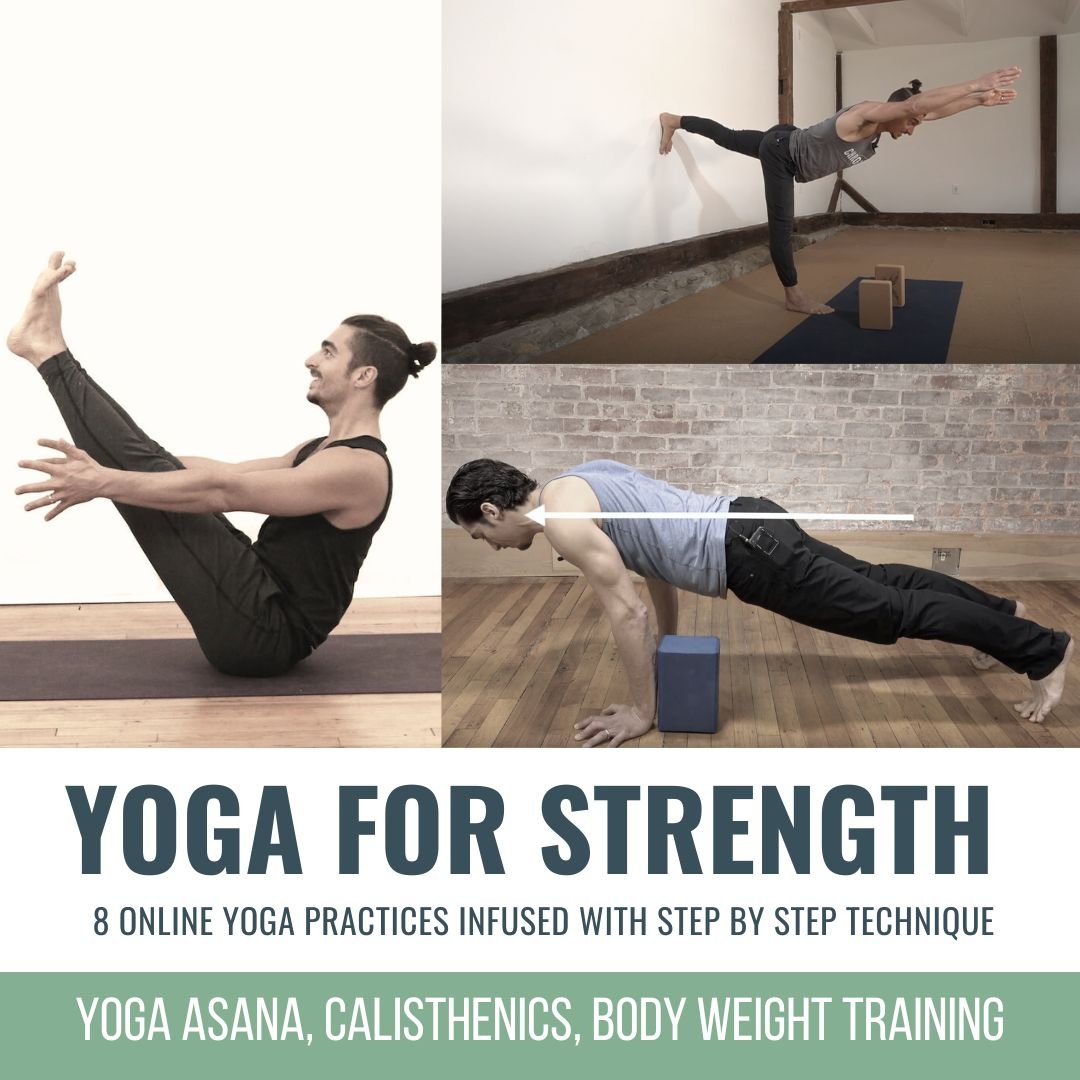
YOGA FOR STRENGTH

YOGA ASANA, CALISTHENICS,  BODY WEIGHT TRAINING

  • 8 Chromatic Yoga practices with founder Matt Giordano
  • Physically Invigorating Yet Accessible
  • Calisthenics and Body Weight Training For Improved Strength and Functionality
  • Improve Joint Integrity, Mobility, Balance, Stability, and Muscular Health
  • All Major Movement Joints
  • Designed as “Your Daily Yoga” 60 Minute Classes
  • Non-dogmatic, Anatomy informed Alignment
  • The Perfect Blend of Knowledge and Practice
  • Chromatic Slow Flow Style: Moderate Vinyasa Pacing Infused with Technique and Non-dogmatic Alignment
  • 8 Continuing Education hours with Yoga Alliance and American Yoga Council
  • 8 Accredited Practice Hours with the Chromatic School of Yoga
  • Step-by-Step instruction for increased accessibility
  • Sweat, Breath, Strengthen, Stretch and Feel Amazing!

BRIDGE POSE ON YOUR BACK

We begin on our backs in Bridge Pose to establish spinal extension without the complexity of weight-bearing on the hands. Matt cues robot arms first, drawing the shoulder blades together as the heart lifts upward. From there, the hips rise using the buttock muscles, not momentum.

Interlacing the hands behind the back adds another layer, pressing the arms into the floor to activate the upper back. This creates a full posterior-chain engagement: glutes drive the pelvis up while the muscles between the shoulder blades help open the chest.

It’s a simple setup, but it teaches an important pattern, which is lift from the back body, not just the front core. Bridge becomes our rehearsal space for what Reverse Tabletop will soon demand.

WATCH THE VIDEO

REVERSE TABLETOP STRENGTH: BUILD A SOLID BACK

REVERSE TABLETOP DRILL

From Bridge, we transition into Reverse Tabletop. Hips lift, shoulders draw back, and the chest opens like Upward Dog, only now we’re facing the sky. Hand placement is personal; Matt reminds us to choose whatever feels best for the shoulders, since today’s priority is spinal strength.

Pressing through the heels activates the glutes, while the back muscles keep the pelvis buoyant. Then comes the unilateral challenge: lifting one knee at a time. As one leg floats, the pelvis naturally wants to dip and this is where the QL and spinal muscles step in.

Matt cues us to keep both sides of the pelvis level, switching legs and noticing imbalances. Flexed feet increase glute engagement, making the drill more demanding and more rewarding.
200 Hour Online Teacher Training Certification

200 HOUR ONLINE TEACHER TRAINING

GET CERTIFIED & DEEPEN YOUR YOGA PRACTICE

  • Deepen your yoga practice
  • Build confidence speaking in front of groups in person and online
  • Learn foundational class structures and templates
  • Learn techniques for a wide range of yoga postures
  • Get certified and highly qualified to teach yoga
  • Yoga Alliance Globally Recognized Certification Program

STRAIGHTEN UP

Next, we refine alignment by starting in a Dandasana-like shape: shoulders back, heart open, shoulder blades drawing together. Only after establishing spinal extension do we kick down through the heels and send the hips skyward.

Matt emphasizes relaxing the front body so the back muscles do the real work. This isn’t about crunching, it’s about opening the chest while strengthening the spine. From here, we add controlled repetitions: lifting on the inhale, lightly tapping the hips down on the exhale, then rising again.

Each round reinforces the same message, which is to maintain shoulder position, keep the heart leading, and power the movement from the back body. These small pulses build endurance and coordination where we need it most.
300 hour teacher training online

300 HOUR ONLINE TEACHER TRAINING

GET 500 HOUR CERTIFIED AS A MASTER TEACHER

Master your skill set as a teacher through refined techniques, anatomy, biomechanics, sequencing, philosophy, meditation techniques, theming, yoga business, and much more!

  • Get 500 hour certified
  • Learn anatomy, biomechanics, asana techniques
  • Expand your teaching skills
  • Masterful sequencing and verbal delivery
  • Learn meditation and breathwork techniques
  • Transformative tools: theming, dharma talks, satsang

BUILD YOUR BACK, CHANGE YOUR PRACTICE

Reverse Tabletop teaches us that lasting strength comes from repetition, awareness, and effort. As Matt directs and his wife @dancinbedka demonstrates, we see how consistent engagement of the glutes, spinal muscles, and upper back creates a more supportive relationship with gravity.

By pairing Bridge, Reverse Tabletop, single-leg variations, and controlled lifts, we train the posterior chain to hold us upright, not just in this drill, but across our entire practice. Strong backs lead to better backbends, steadier arm balances, and healthier posture off the mat.

Sometimes the most transformative work happens in unassuming shapes. When we commit to building a solid back body, everything else starts to feel lighter.

If you’re ready to move beyond surface level strength and truly understand how to recruit your body’s potential with precision, join Matt inside his  Yoga For Strength online immersion and experience these principles layered into a full, progressive yoga practices.


The 200 Hr. Teacher Training: Click Here to See the Next Start Date

The 300 Hr. Advanced Teacher Training: Click Here to See the Next Start Date

Article by Trish Curling

Video Extracted From: Yoga For Strength Immersion
lotus pose online yoga classes

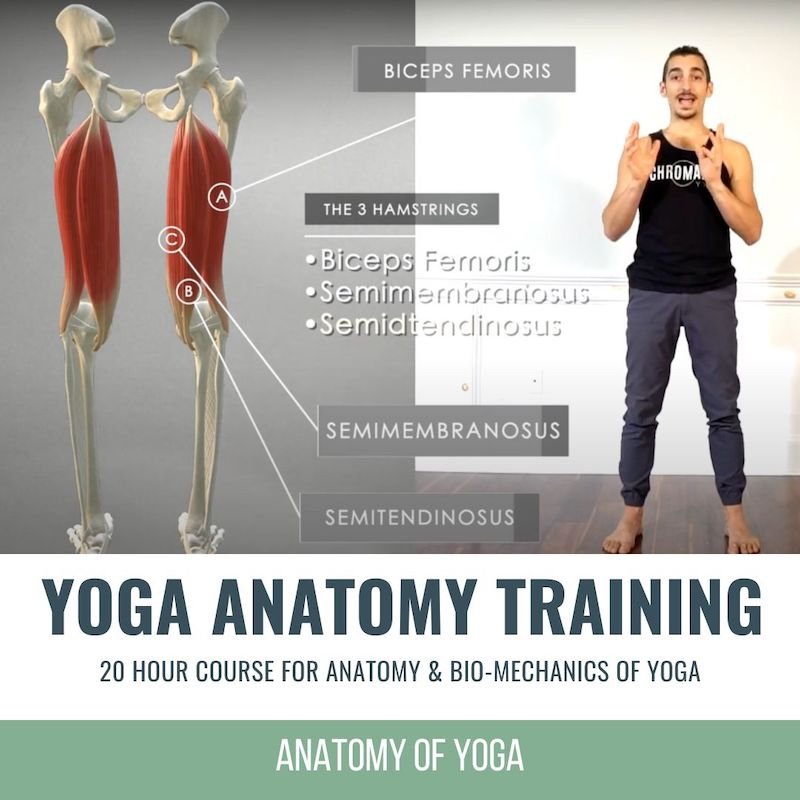
ONLINE ANATOMY COURSE

  • Accessible, exciting, and easy to learn
  • Anatomy and biomechanics for yoga
  • Appropriate for both teachers and students
  • Learn joint alignment vs pose alignment
  • Demystify yoga poses and transitions
  • Release aches and pains
  • Learn how to avoid common injuries
  • Caters to all levels with modifications and props
  • 20 hours Continued Education Credits with Yoga Alliance
  • 20 hours toward Chromatic Yoga Certification and 300 Hour
  • Lifetime access

Continue Learning

A Yoga Treatment For The Shoulders

A Yoga Treatment For The Shoulders

A Yoga Treatment For The ShouldersSTABILITYA YOGA TREATMENT FOR THE SHOULDERS Shoulders tend to speak up when stability is missing. Matt reminds us that building strength isn’t about aesthetics, it’s about support, resilience, and keeping the body working as one...

read more
Reverse Tabletop Strength

Reverse Tabletop Strength

Reverse Tabletop StrengthMECHANICSREVERSE TABLETOP STRENGTH “Solid” implies strength,  yet in yoga, we can easily lose sight of how intentionally building the back body supports everything we do. Reverse Tabletop may look simple, but it asks a lot from the posterior...

read more
Focus On Eagle Pose Legs

Focus On Eagle Pose Legs

Focus On Eagle Pose LegsMECHANICSFOCUS ON EAGLE POSE LEGS When we focus on Eagle Pose legs, it’s tempting to assume the bind is a flexibility test. But this posture quietly reveals something more nuanced: timing, joint mechanics, and how efficiently the legs organize...

read more
Build Connection On The Mat

Build Connection On The Mat

Build Connection On The MatGROUNDINGBUILD CONNECTION ON THE MAT Building connection on the mat starts at the place we tend to overlook: our feet. If we only practice the “shape” of a posture, we can miss the biomechanics that change how the whole pose feels from the...

read more
Flying Revolved Half Lotus

Flying Revolved Half Lotus

Flying Revolved Half LotusARM BALANCEFLYING REVOLVED HALF LOTUS Some postures don’t arrive through imitation; they arrive through investigation. Flying Revolved Half Lotus is one of those shapes. It borrows familiar ingredients like Side Crow mechanics, hip opening,...

read more
Eka Pada Bakasana

Eka Pada Bakasana

Eka Pada BakasanaSINGLE LEG CROWEKA PADA BAKASANA Eka Pada Bakasana asks us to balance curiosity with patience. This one-legged crow variation isn’t just about lifting a leg, it’s about organizing pressure, timing, and trust in unfamiliar territory. The posture...

read more

THE FREE TECHNIQUE PACK

When You Subscribe, You Will Get Instant Access to

  • the Technique Pack: 15 yoga pose breakdowns
  • exclusive online course discounts
  • exclusive blogs and videos
  • This field is for validation purposes and should be left unchanged.

Spanda In Backbends

Spanda In Backbends

SIDE PLANK

SPANDA IN BACKBENDS

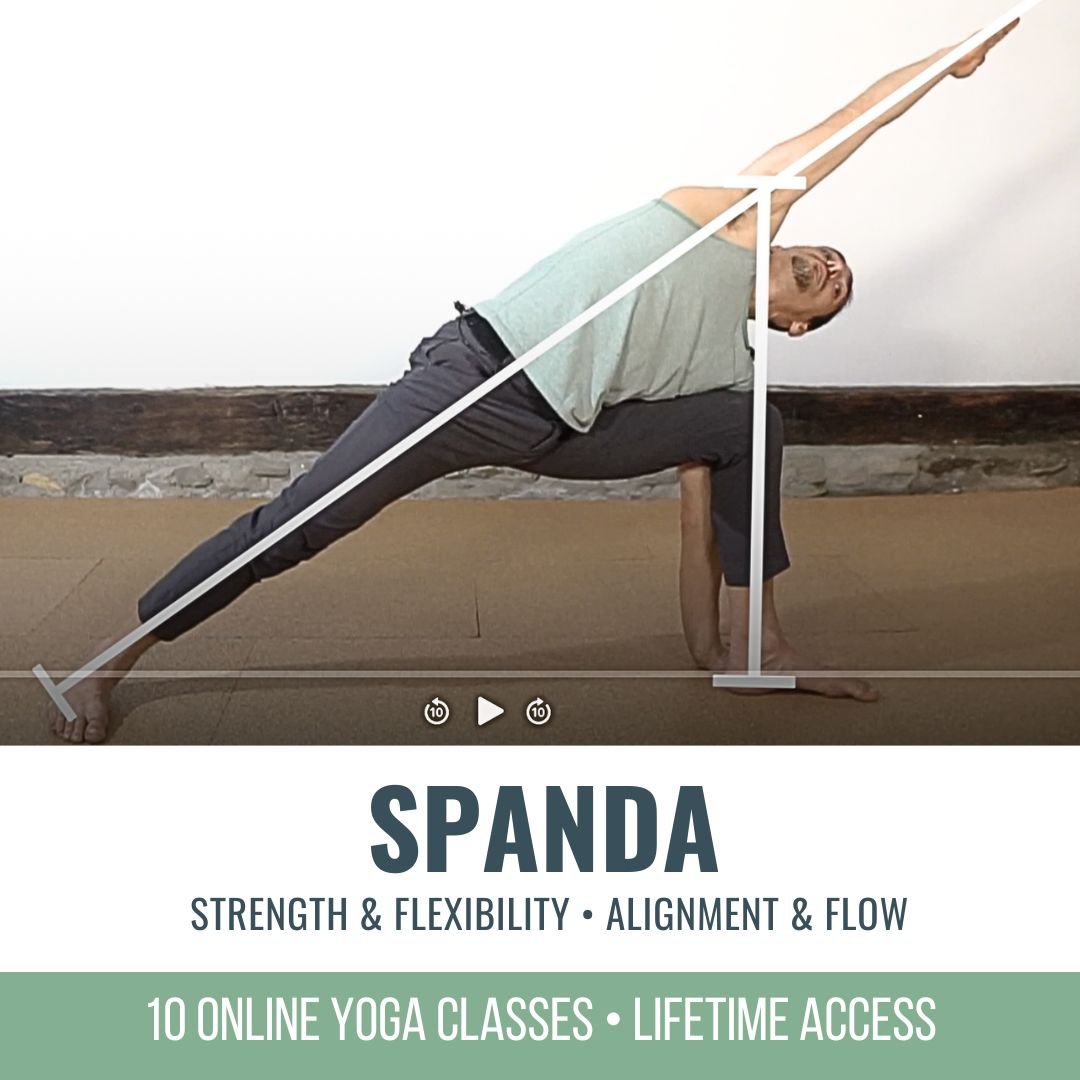
Spanda in backbends is the key to creating both stability and freedom in spinal extension. Backbends are not just about bending; they require a balance between expansion and controlled engagement to prevent excessive compression in the lower back. When we lengthen the space between the pubic bone and sternum, we create more even spinal extension, allowing the movement to be distributed rather than concentrated in one area. In today’s video, Matt demonstrates ways to create spinal extension to resist common patterns of spinal compression. He explores this through side plank variations, showing how precise alignment and muscular engagement can help maintain openness without strain. By working with Spanda—the pulsation between effort and ease—we learn to cultivate backbends that feel strong, spacious, and sustainable, rather than relying on passive flexibility alone.

chromatic yoga 15 hour immersion

SPANDA

REGISTRATION NOW OPEN

  • 10 Chromatic Yoga practices with founder Matt Giordano
  • Full length 75 minute classes
  • Spanda: The Divine Pulse Between Expansion and Contraction
  • Strong and Long Held Postures with Pristine Technique
  • Vinyasa Flows Between Holds to Raise the Heart Rate
  • Expect a Cardiovascular Workout
  • The Dance Between Strength and Flexibility, Alignment and Movement
  • 12 Continuing Education hours with Yoga Alliance
  • 12 Accredited Hours with the Chromatic School of Yoga
  • Step-by-Step instruction for increased accessibility
  • Sweat, Breath, Strengthen, Stretch and Feel Amazing!

SPANDA MORE DEEPLY EXPLAINED

Spanda is the Sanskrit term for the natural pulsation of energy—the constant rhythm of expansion and contraction that exists in all aspects of life.  It is the balance between expansion and contraction, effort and release, strength and softness. Rather than a static state, Spanda is a dynamic rhythm that allows us to move with greater awareness and responsiveness. In backbends, this concept becomes especially relevant—we expand through the front body while maintaining the necessary contraction to create support and stability. Backbends have the capacity to become either too rigid or too passive, leading to compression rather than true openness. By embracing and applying this “pulsation” of Spanda, we cultivate both strength and fluidity in our practice, allowing our movements to feel more integrated and sustainable. Understanding Spanda reminds us that every posture, breath, and transition is a dance between opposing yet complementary forces.

WATCH THE VIDEO

SPANDA IN BACKBENDS: LEARNING THE SKILL SETS FOR EXPANSION

CONTRACT TO EXPAND IN BACKBENDS

In today’s video, Matt demonstrates how Side Plank transforms into a backbend, revealing the balance between contraction and expansion. This movement requires a strong engagement of the underside body—the glutes, back muscles, and obliques—all working together to lift the hips. By drawing the shoulder blades toward one another and activating the back body, we create the stability needed to open into the shape. Expansion isn’t just about flexibility; it’s built through each intentional action in the setup. Matt offers a clear system: 

  1.  Begin in Side Plank with lifted hips 
  2. Turn the pelvis and chest away from the ground 
  3. Press the center of the “bow” (spine) forward and up. 

Exploring both sides of the posture in today’s video allows us to examine where contraction fuels expansion, reinforcing the principle of Spanda. For extra support, the top leg can act as a kickstand, providing stability as we refine the movement.

200 Hour Online Teacher Training Certification

200 HOUR ONLINE TEACHER TRAINING

GET CERTIFIED & DEEPEN YOUR YOGA PRACTICE

  • Deepen your yoga practice
  • Build confidence speaking in front of groups in person and online
  • Learn foundational class structures and templates
  • Learn techniques for a wide range of yoga postures
  • Get certified and highly qualified to teach yoga
  • Yoga Alliance Globally Recognized Certification Program

FURTHER EXPANSION

Increasing the complexity of Side Plank introduces the idea of further expansion. At first, these variations might feel more restrictive rather than freeing, as they challenge our strength, coordination, and balance. When new movements feel difficult—or even frustrating—we may think we’re contracting rather than expanding. However, true expansion comes from learning where to engage, where to stabilize, and how to refine movement to access deeper expressions of a posture. In today’s video, Matt explains that as we expand, the top leg becomes lighter, allowing for more possibilities. From here, we can explore a Tree Pose variation, bending the top knee and placing the foot against the inner leg, or we can take it further by lifting the knee toward the side body with the top hand. These progressions remind us that growth happens through challenge, as contraction paves the way for greater expansion.

300 hour teacher training online

300 HOUR ONLINE TEACHER TRAINING

GET 500 HOUR CERTIFIED AS A MASTER TEACHER

Master your skill set as a teacher through refined techniques, anatomy, biomechanics, sequencing, philosophy, meditation techniques, theming, yoga business, and much more!

  • Get 500 hour certified
  • Learn anatomy, biomechanics, asana techniques
  • Expand your teaching skills
  • Masterful sequencing and verbal delivery
  • Learn meditation and breathwork techniques
  • Transformative tools: theming, dharma talks, satsang

THE HIGHEST HEIGHT

Reaching the highest height in backbends isn’t about pushing deeper—it’s about finding the balance between strength and openness, contraction and expansion. Spanda in backbends reminds us that every movement requires both effort and surrender, stability and freedom. Matt’s teachings emphasize that true spinal extension isn’t about collapsing into flexibility but actively creating space through muscular engagement. We learn to contract the right muscles to support safe, sustainable expansion. This principle extends beyond the mat—just as we find lift through grounding in yoga, we grow in life by embracing both challenge and ease. Expansion isn’t passive; it’s built through intention, awareness, and steady effort. By understanding Spanda, we cultivate resilience. 

Go deeper into these teachings in Matt’s current online Spanda Immersion.

The 200 Hr. Teacher Training: Click Here to See the Next Start Date

The 300 Hr. Advanced Teacher Training: Click Here to See the Next Start Date

Article by Trish Curling

Video Extracted From: Spanda Immersion

lotus pose online yoga classes

ONLINE ANATOMY COURSE

  • Accessible, exciting, and easy to learn
  • Anatomy and biomechanics for yoga
  • Appropriate for both teachers and students
  • Learn joint alignment vs pose alignment
  • Demystify yoga poses and transitions
  • Release aches and pains
  • Learn how to avoid common injuries
  • Caters to all levels with modifications and props
  • 20 hours Continued Education Credits with Yoga Alliance
  • 20 hours toward Chromatic Yoga Certification and 300 Hour
  • Lifetime access

Continue Learning

A Yoga Treatment For The Shoulders

A Yoga Treatment For The Shoulders

A Yoga Treatment For The ShouldersSTABILITYA YOGA TREATMENT FOR THE SHOULDERS Shoulders tend to speak up when stability is missing. Matt reminds us that building strength isn’t about aesthetics, it’s about support, resilience, and keeping the body working as one...

read more
Reverse Tabletop Strength

Reverse Tabletop Strength

Reverse Tabletop StrengthMECHANICSREVERSE TABLETOP STRENGTH “Solid” implies strength,  yet in yoga, we can easily lose sight of how intentionally building the back body supports everything we do. Reverse Tabletop may look simple, but it asks a lot from the posterior...

read more
Focus On Eagle Pose Legs

Focus On Eagle Pose Legs

Focus On Eagle Pose LegsMECHANICSFOCUS ON EAGLE POSE LEGS When we focus on Eagle Pose legs, it’s tempting to assume the bind is a flexibility test. But this posture quietly reveals something more nuanced: timing, joint mechanics, and how efficiently the legs organize...

read more
Build Connection On The Mat

Build Connection On The Mat

Build Connection On The MatGROUNDINGBUILD CONNECTION ON THE MAT Building connection on the mat starts at the place we tend to overlook: our feet. If we only practice the “shape” of a posture, we can miss the biomechanics that change how the whole pose feels from the...

read more
Flying Revolved Half Lotus

Flying Revolved Half Lotus

Flying Revolved Half LotusARM BALANCEFLYING REVOLVED HALF LOTUS Some postures don’t arrive through imitation; they arrive through investigation. Flying Revolved Half Lotus is one of those shapes. It borrows familiar ingredients like Side Crow mechanics, hip opening,...

read more
Eka Pada Bakasana

Eka Pada Bakasana

Eka Pada BakasanaSINGLE LEG CROWEKA PADA BAKASANA Eka Pada Bakasana asks us to balance curiosity with patience. This one-legged crow variation isn’t just about lifting a leg, it’s about organizing pressure, timing, and trust in unfamiliar territory. The posture...

read more

THE FREE TECHNIQUE PACK

When You Subscribe, You Will Get Instant Access to

  • the Technique Pack: 15 yoga pose breakdowns
  • exclusive online course discounts
  • exclusive blogs and videos
  • This field is for validation purposes and should be left unchanged.

Air Line Activation

Air Line Activation

back strength

AIR LINE ACTIVATION

Finding ways to effectively strengthen the back in our yoga practice can be a challenge. If our goal is to cultivate strength in this area of the body, we must understand that it requires more than just adding backbends into our sequences on the mat. What’s imperative is both thoughtfulness and an execution of the specific techniques required to build strength and simultaneously serve our individual needs within any given practice.

Yoga sequences that underpin the air element from yoga philosophy are utterly valuable in the endeavour to find strength in our back bodies. Beyond the air element, however, is Matt’s development of a kinesio-elemental line, called the Air Line in Chromatic Yoga. Utilizing specific techniques to activate the muscles involved in the Air Line will assist in safely and effectively building back strength.

chromatic yoga 15 hour immersion

THE POSE FACTORY

WAITLIST NOW OPEN

  • Dogmatic alignment versus functional alignment
  • Learn popular postural pitfalls
  • Myths versus truth
  • Formulaic approach for comprehensive learning
  • Excellent guide for yoga enthusiasts
  • Must-have for yoga teachers
  • Joint-health awareness
  • Muscle integrity, range of motion
  • Props for accessibity
  • Alignment alterations in the case of injuries

WHAT IS THE AIR LINE?

When studying with Matt, we learn that the qualities associated with the air element include lightness, freedom, and inspiration. When expressed in physical asana, these qualities include postures that elongate and open up the front body. We experience a sense of celebration and expression, and we embody a sense of power.

According to Matt, the Air Line is the reverse of the Fire Line. Through the back core muscles, the Air Line connects the shoulder blade to the opposite hip. Some of the back muscles involved in the Air Line include the erector spinae group, quadratus lumborum, rhomboids, trapezius, rotators of the hip, hamstrings, and the rotators of the spine. The rotators of the spine allow us to articulate specific vertebrae, pulling each one into rotation. When executing postures that target the Air Line, we achieve spinal extension, rotation, and a stretch of the Fire Line (front body).

WATCH THE VIDEO

AIR LINE ACTIVATION: YOGA FOR BACK STRENGTH

BUILD YOUR BASE

Although the spine is designed to move freely in multiple directions, it is equally designed to provide stability. Taking care to warm up the muscles that surround and support the spine is essential in maintaining its health. Integrating precise techniques with the following postures will help prepare these muscles and pattern the right articulations to target the Air Line.

Prone Back-Body Lifts

In today’s video, we see that the key action here is to lift the shoulder of the extended arm up to assist in greater retraction of the scapula. This supports greater spinal extension and rotation.

High-Lunge Twist

As we see in Matt’s demonstration of High-Lunge Twist in the video, another quality included in the air element is momentum. There’s a sweeping action of the arms that more deeply accentuates the connection between the shoulder blade and opposite hip.

200 Hour Online Teacher Training Certification

200 HOUR ONLINE TEACHER TRAINING

GET CERTIFIED & DEEPEN YOUR YOGA PRACTICE

  • Deepen your yoga practice
  • Build confidence speaking in front of groups in person and online
  • Learn foundational class structures and templates
  • Learn techniques for a wide range of yoga postures
  • Get certified and highly qualified to teach yoga
  • Yoga Alliance Globally Recognized Certification Program

TIGER POSE, TWISTED MONKEY, AND LOW LUNGE

The only way to progress is to increase the challenge. 

Tiger Pose

In the video, Matt demonstrates a Tiger Pose variation focused on the Air Line. One of the challenges here comes from attempting to maintain the lift and the open position of the pelvis while also maintaining the open position of the lifted arm. When attempting to lift higher through one side, we find that the opposite side tries to move into a more closed position. Lifting as much as possible through both sides will support the activation of the Air Line.

Twisted Monkey

This Twisted Monkey variation incorporates the activation of the hamstrings along with the other actions we’ve already practiced.

Low Lunge

The experience here is a lovely stretch of the Fire Line. It’s important that in the exploration of the pose, we remain mindful not to compress the spine. Lifting the belly and sending the chest more forward will reduce the chance of compression. 

300 hour teacher training online

300 HOUR ONLINE TEACHER TRAINING

GET 500 HOUR CERTIFIED AS A MASTER TEACHER

Master your skill set as a teacher through refined techniques, anatomy, biomechanics, sequencing, philosophy, meditation techniques, theming, yoga business, and much more!

  • Get 500 hour certified
  • Learn anatomy, biomechanics, asana techniques
  • Expand your teaching skills
  • Masterful sequencing and verbal delivery
  • Learn meditation and breathwork techniques
  • Transformative tools: theming, dharma talks, satsang

EXPAND YOUR BASE

The variations of Supported Warrior III and Half Camel that Matt offers in today’s video help expand our understanding of the Air Line.

Supported Warrior III

Matt describes this as an active version of the Air Line, an excellent strengthener for the back.

Half Camel Pose

A posture like Half Camel becomes easier when we understand the patterning of the Air Line. The shoulder-blade-to-hip connection produces a healthy expansion in the front body. The posture tends to feel more natural, rather than forced.

If we pay attention to the finer details and utilize the step-by-step cues Matt offers, we’ll experience new sensations, benefits, and results.

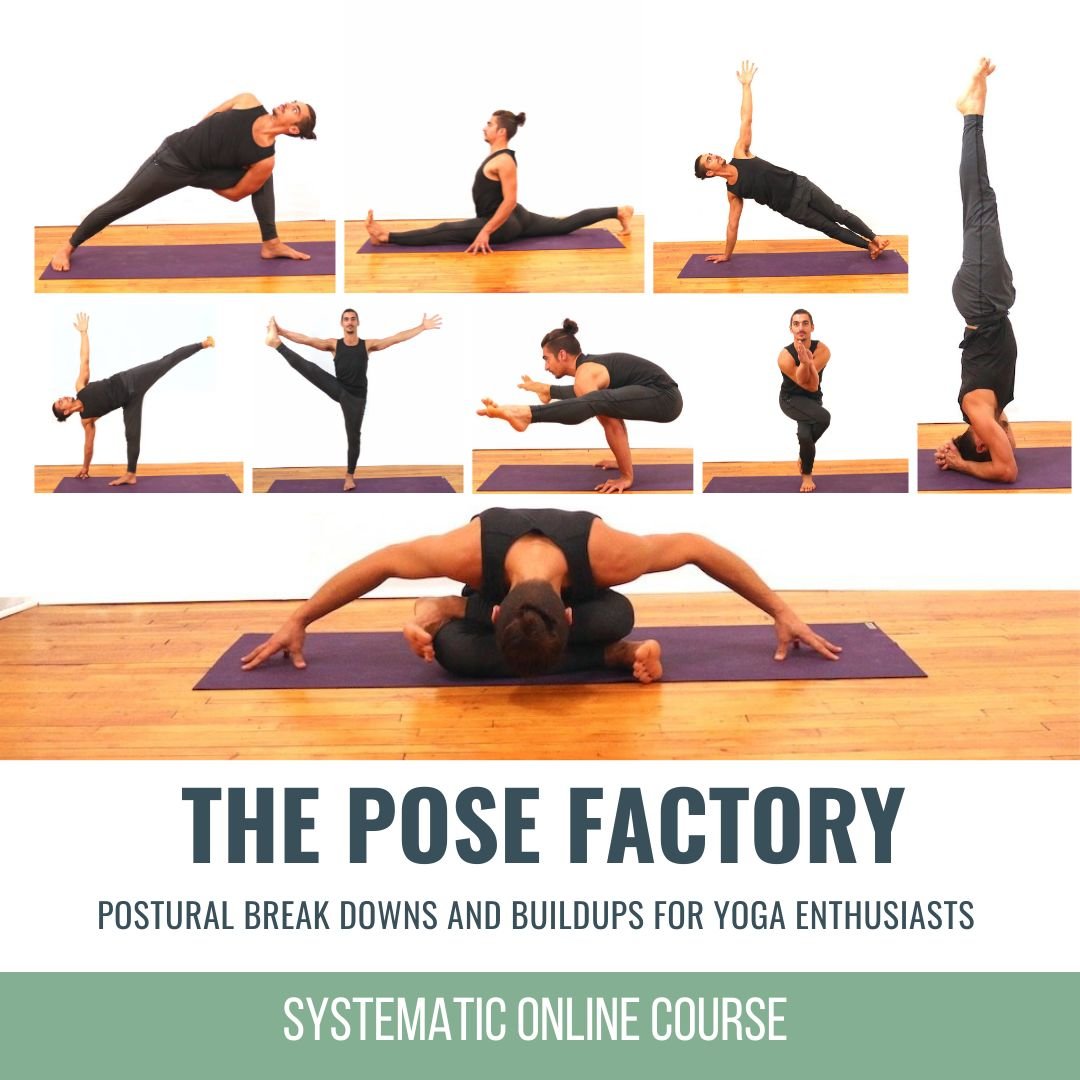
If you’re interested in breaking down postures so that they make better sense biomechanically for your own body, then you’ll want to get on the waitlist for Matt’s online training course The Pose Factory.

The 200 Hr. Teacher Training: Click Here to See the Next Start Date

The 300 Hr. Advanced Teacher Training: Click Here to See the Next Start Date

Article by Trish Curling

Videos Extracted From: Breath Of Fire

lotus pose online yoga classes

ONLINE ANATOMY COURSE

  • Accessible, exciting, and easy to learn
  • Anatomy and biomechanics for yoga
  • Appropriate for both teachers and students
  • Learn joint alignment vs pose alignment
  • Demystify yoga poses and transitions
  • Release aches and pains
  • Learn how to avoid common injuries
  • Caters to all levels with modifications and props
  • 20 hours Continued Education Credits with Yoga Alliance
  • 20 hours toward Chromatic Yoga Certification and 300 Hour
  • Lifetime access

Continue Learning

A Yoga Treatment For The Shoulders

A Yoga Treatment For The Shoulders

A Yoga Treatment For The ShouldersSTABILITYA YOGA TREATMENT FOR THE SHOULDERS Shoulders tend to speak up when stability is missing. Matt reminds us that building strength isn’t about aesthetics, it’s about support, resilience, and keeping the body working as one...

read more
Reverse Tabletop Strength

Reverse Tabletop Strength

Reverse Tabletop StrengthMECHANICSREVERSE TABLETOP STRENGTH “Solid” implies strength,  yet in yoga, we can easily lose sight of how intentionally building the back body supports everything we do. Reverse Tabletop may look simple, but it asks a lot from the posterior...

read more
Focus On Eagle Pose Legs

Focus On Eagle Pose Legs

Focus On Eagle Pose LegsMECHANICSFOCUS ON EAGLE POSE LEGS When we focus on Eagle Pose legs, it’s tempting to assume the bind is a flexibility test. But this posture quietly reveals something more nuanced: timing, joint mechanics, and how efficiently the legs organize...

read more
Build Connection On The Mat

Build Connection On The Mat

Build Connection On The MatGROUNDINGBUILD CONNECTION ON THE MAT Building connection on the mat starts at the place we tend to overlook: our feet. If we only practice the “shape” of a posture, we can miss the biomechanics that change how the whole pose feels from the...

read more
Flying Revolved Half Lotus

Flying Revolved Half Lotus

Flying Revolved Half LotusARM BALANCEFLYING REVOLVED HALF LOTUS Some postures don’t arrive through imitation; they arrive through investigation. Flying Revolved Half Lotus is one of those shapes. It borrows familiar ingredients like Side Crow mechanics, hip opening,...

read more
Eka Pada Bakasana

Eka Pada Bakasana

Eka Pada BakasanaSINGLE LEG CROWEKA PADA BAKASANA Eka Pada Bakasana asks us to balance curiosity with patience. This one-legged crow variation isn’t just about lifting a leg, it’s about organizing pressure, timing, and trust in unfamiliar territory. The posture...

read more

THE FREE TECHNIQUE PACK

When You Subscribe, You Will Get Instant Access to

  • the Technique Pack: 15 yoga pose breakdowns
  • exclusive online course discounts
  • exclusive blogs and videos
  • This field is for validation purposes and should be left unchanged.

Pin It on Pinterest